
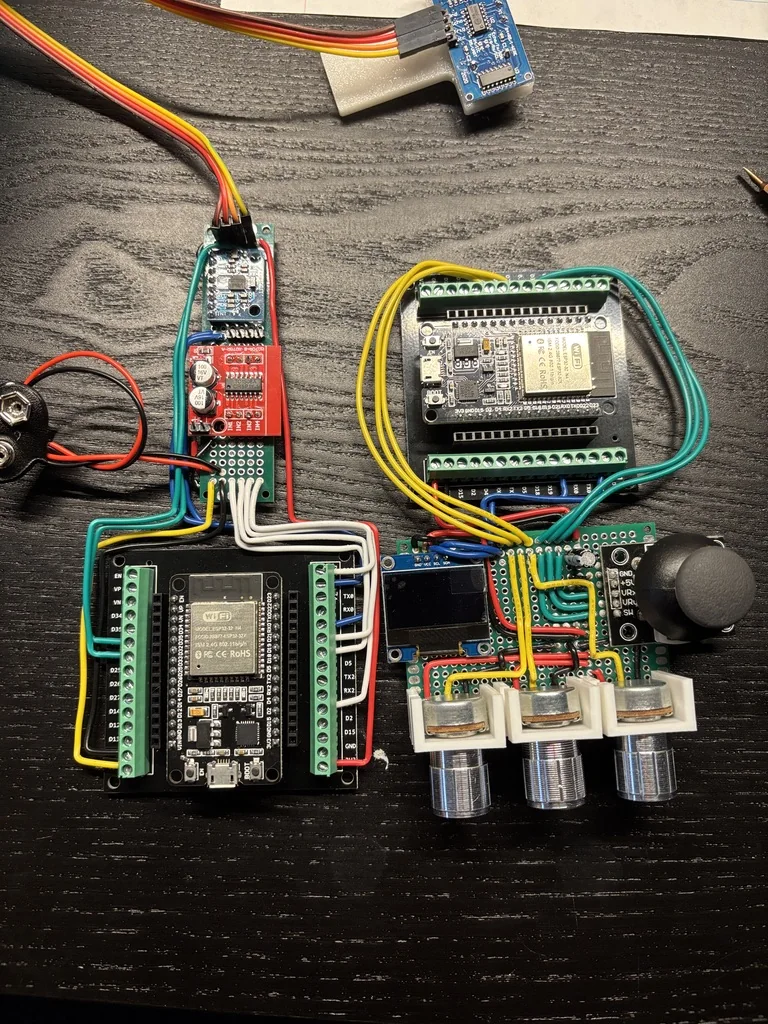
 Teaching prototype built
PID minibot
A heading-controlled robot and live PID-tuning remote, developed as a reference for a 14-week WE FIRST workshop series.
Let the mechanics simplify the software.
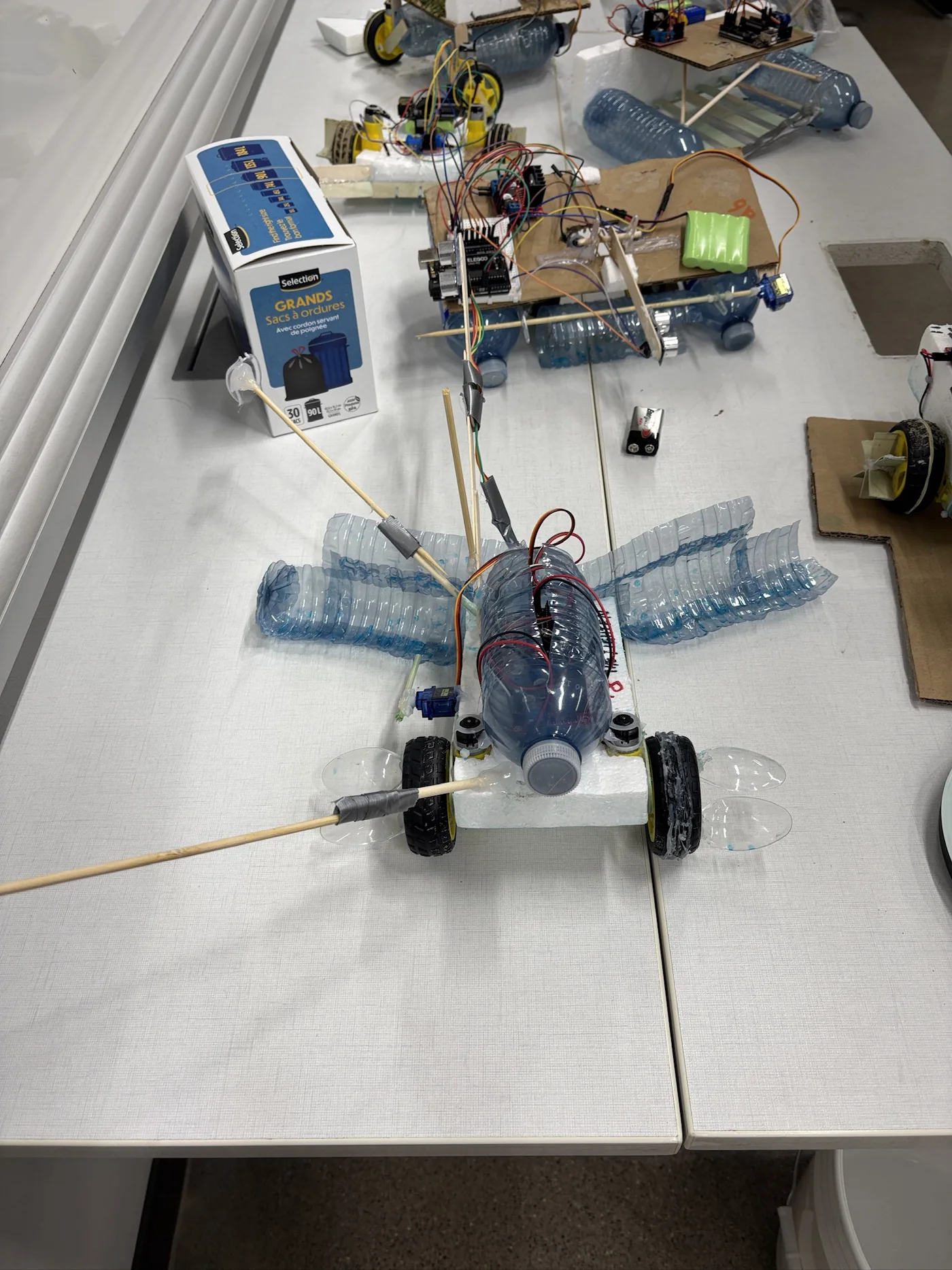
Electrical and software development for an autonomous amphibious vehicle, with passive guidance and a conditional recovery mechanism.
The challenge was to cross from a sandy beach through water, collect floating Styrofoam “turtle eggs,” deliver them onto the opposite beach and return. We had to use supplied materials and electronics, with no commands during the run.
An ultrasonic sensor could have actively centred the robot in the lane. Instead, we chose long skids against the side wall and slightly biased the drive toward it. That gave us a simple mechanical reference through the course.
The wide plow could collect balls across the lane, while the ultrasonic sensor detected the far end and triggered the turnaround before we pushed the balls off the safe beach.
The motors could struggle to pull the vehicle out of the water. A conditional timed servo action helped unstick it if the far-beach condition had not been detected. If it arrived successfully, the recovery action was suppressed.
I reused filtering and deadband experience from the minibot to manage noisy distance measurements. The electrical work, software, build and presentation preparation all had to fit a short overnight challenge.
The team’s result showed the value of a deliberately simple guidance strategy. I owned the electrical and software work; the mechanism and overall vehicle were a shared team design.
 Teaching prototype built
A heading-controlled robot and live PID-tuning remote, developed as a reference for a 14-week WE FIRST workshop series.
 6th place
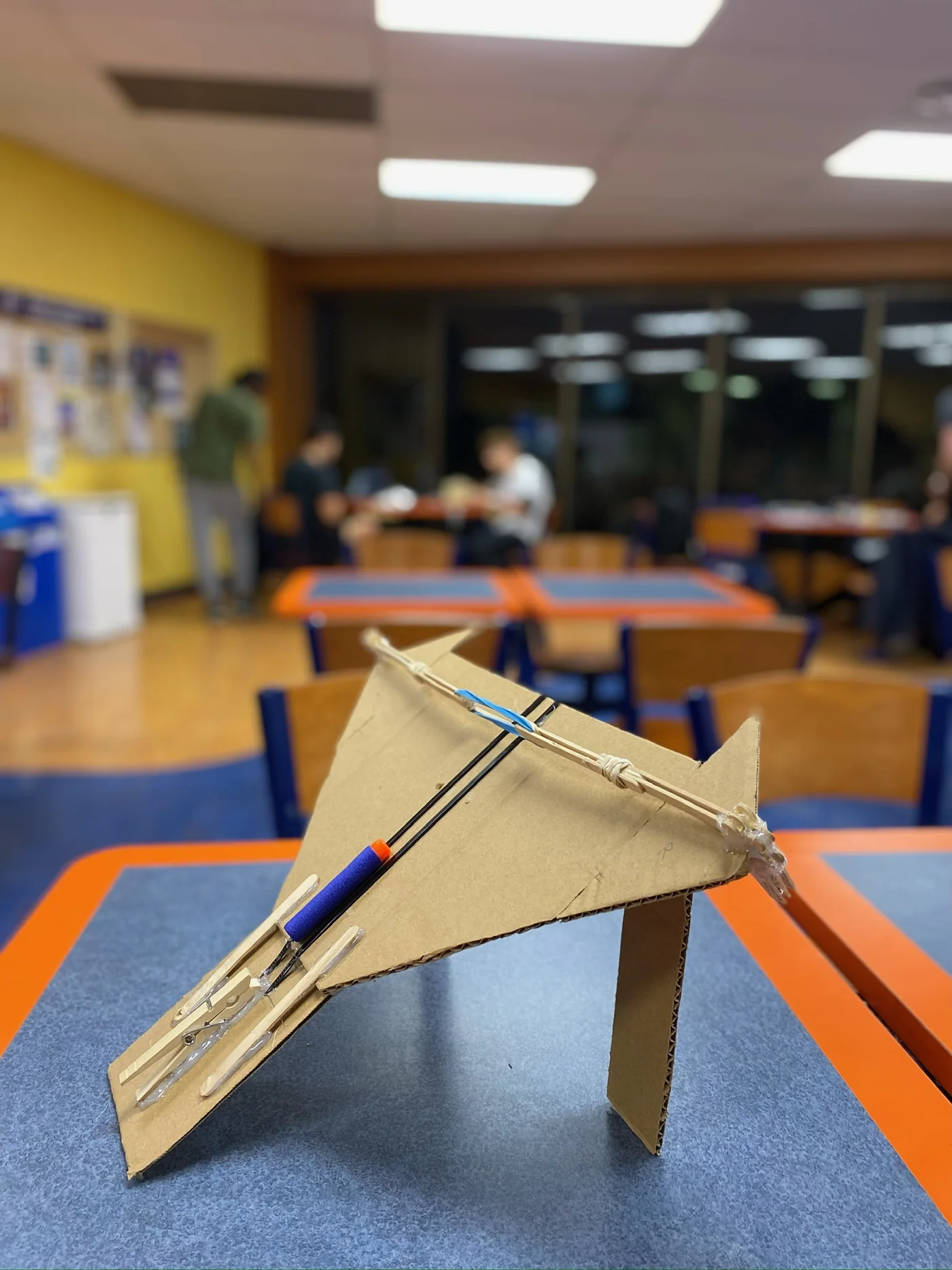
A crossbow-inspired launcher that stored energy in wooden flexures as well as elastic bands, built under material and weight constraints.
 Prototype completed
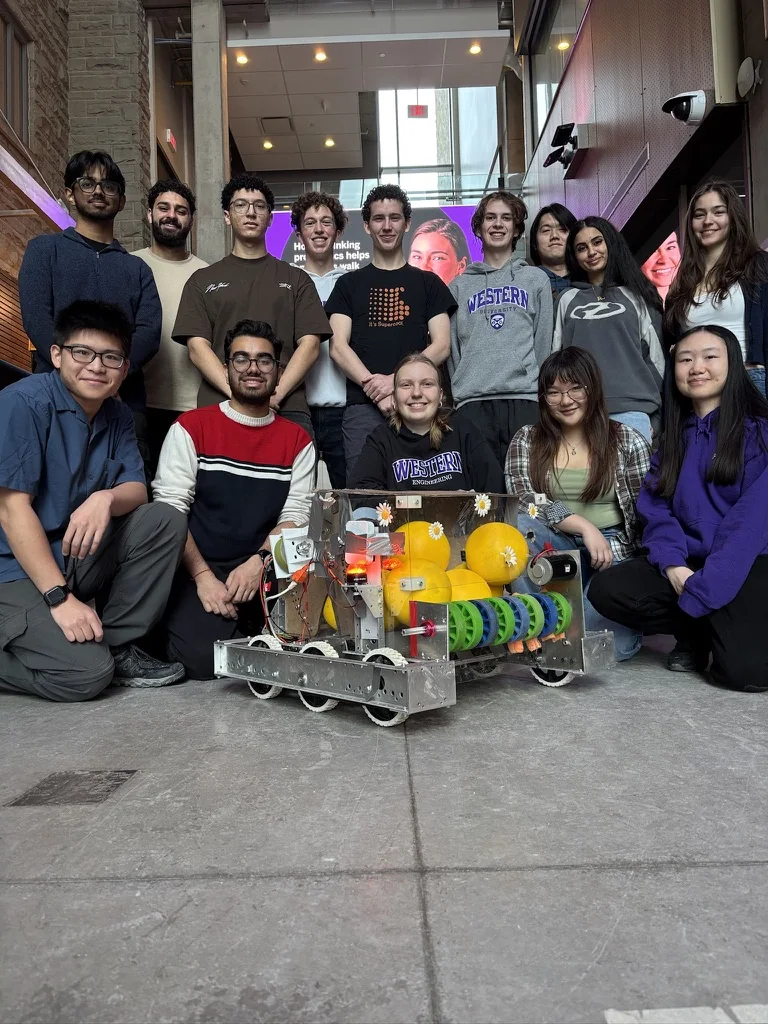
Organizing a three-day robot build and leading the mechanical work, with hands-on development of the shooter and indexer.