
 Installed and in use
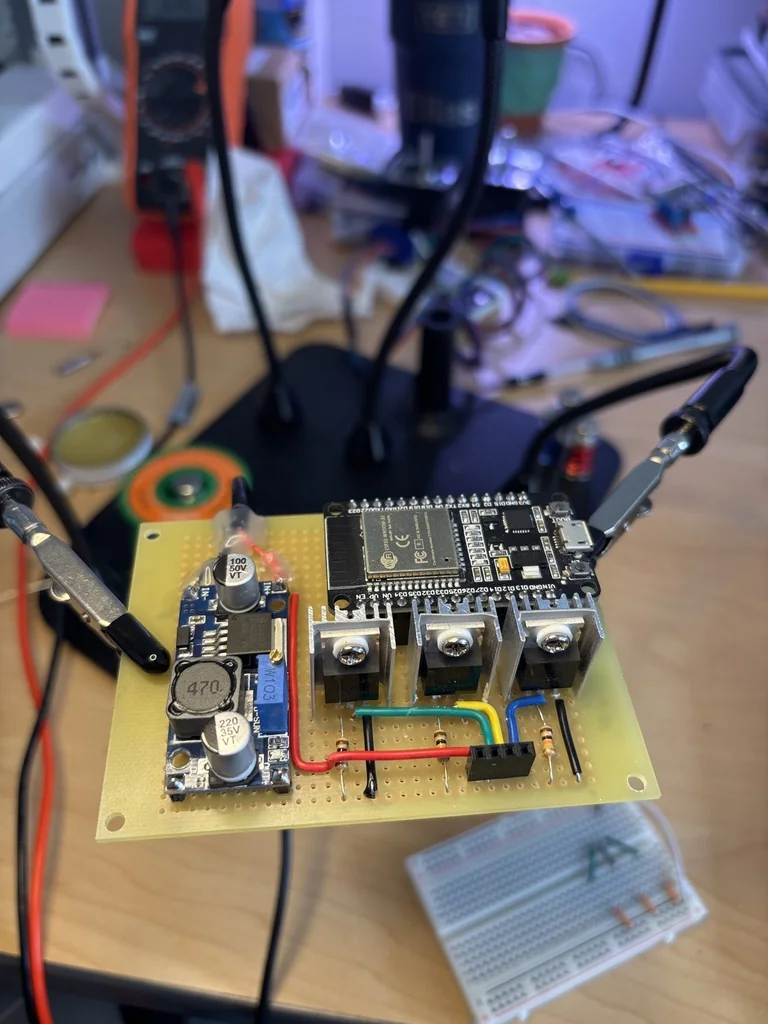
Weather lights
An ESP32 lighting system that turns the morning forecast into colour, brightness and animation, without needing to open a phone.
A robot for learning how control feels.
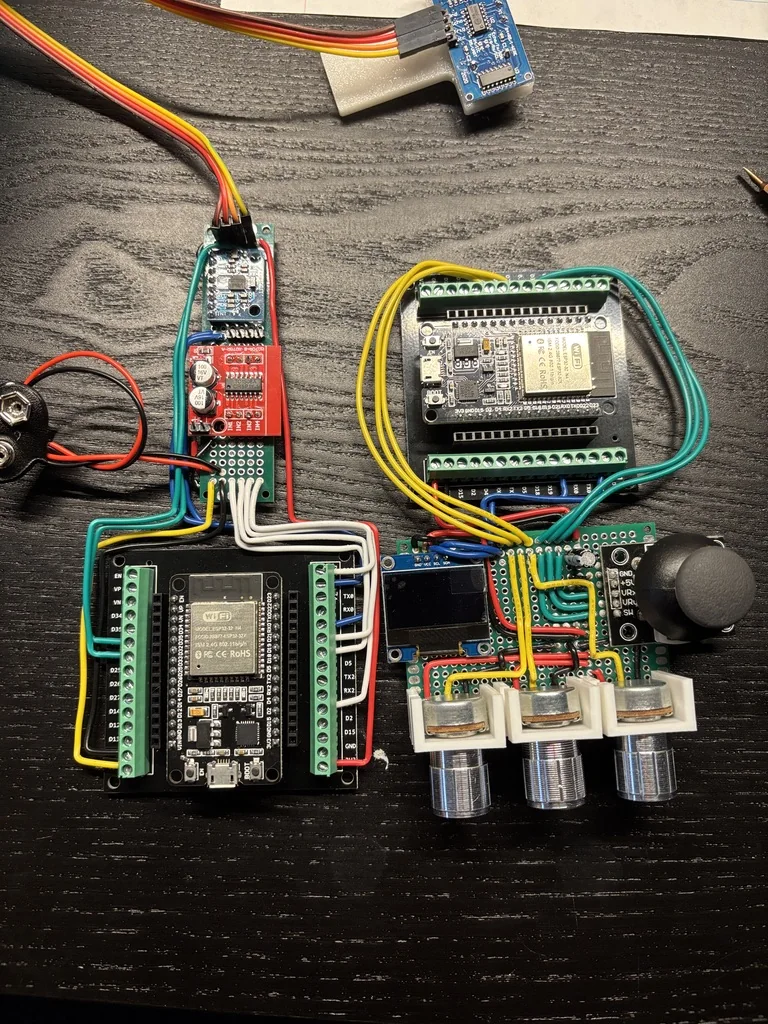
A heading-controlled robot and live PID-tuning remote, developed as a reference for a 14-week WE FIRST workshop series.
I designed the mechanics, electronics and firmware of the first prototype myself to test the concept. We then taught club members how to design and build something similar through a 14-week series.
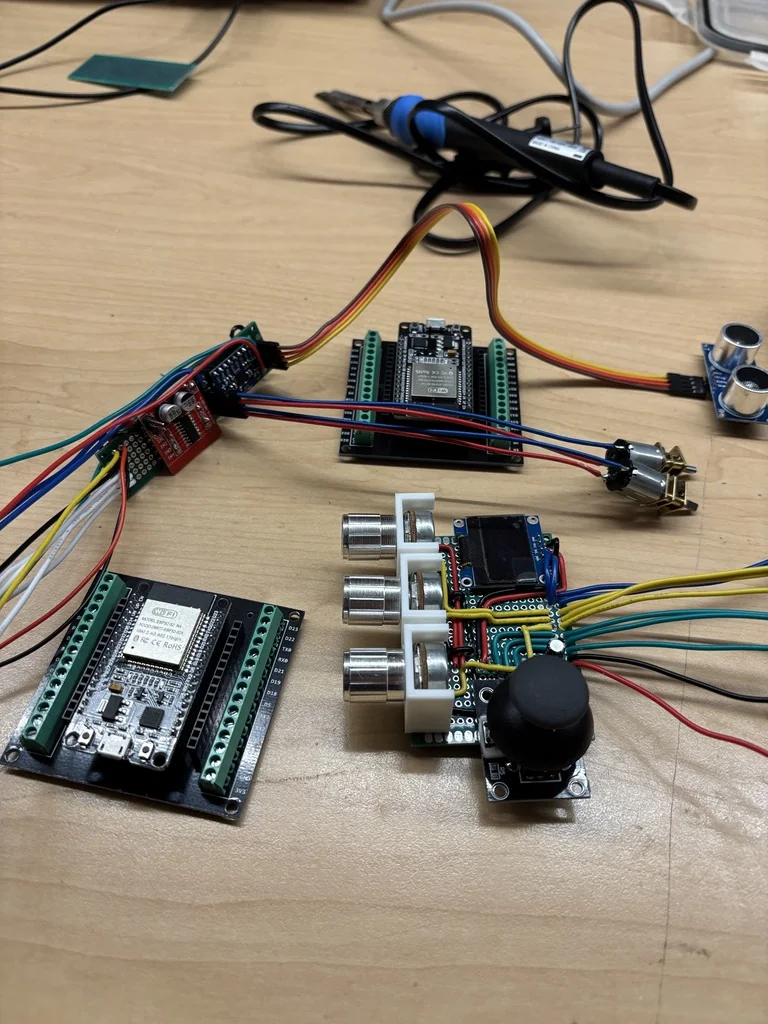
The PID loop used IMU gyro/yaw data to regulate heading. A separate handheld controller let me update P, I and D independently and display their current values. A joystick changed the heading setpoint, and ESP-NOW carried the updates to the robot.
The distance sensor could detect walls, but I pointed mine toward the table so the robot could detect an edge and stop before driving off.
Non-blocking software allowed the robot to read the IMU and update PID without waiting for controller transmissions or other slower tasks.
That separation became a useful pattern in later ESP32 work: time-sensitive control should not have to wait for unrelated input.
Vibration made yaw drift difficult to manage. High- and low-pass filtering, EMA smoothing and a dead zone reduced the problem, but did not eliminate it. Manual joystick nudges could compensate during a demo, but were not a complete solution.
If I rebuilt it, I would consider motor encoders and a magnetometer with sensor fusion. Those are redesign ideas, not features of this prototype. The imperfect behaviour itself became something useful to explain in a control demonstration.
The robot made live control tuning tangible and supported the workshop series. It also made a limitation clear: filtering alone was not a complete answer to accumulated yaw drift.
 Installed and in use
An ESP32 lighting system that turns the morning forecast into colour, brightness and animation, without needing to open a phone.
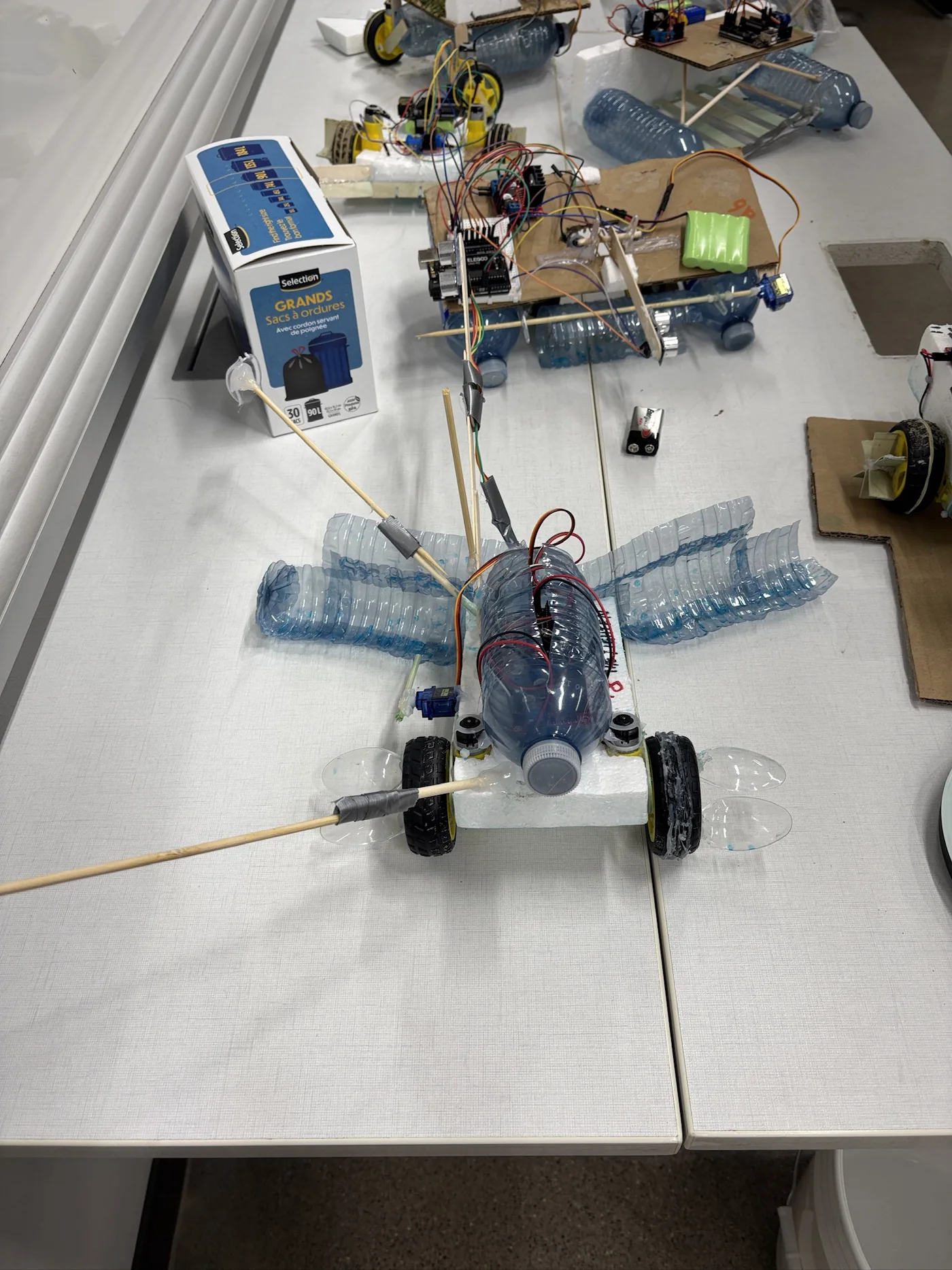 2nd place
Electrical and software development for an autonomous amphibious vehicle, with passive guidance and a conditional recovery mechanism.
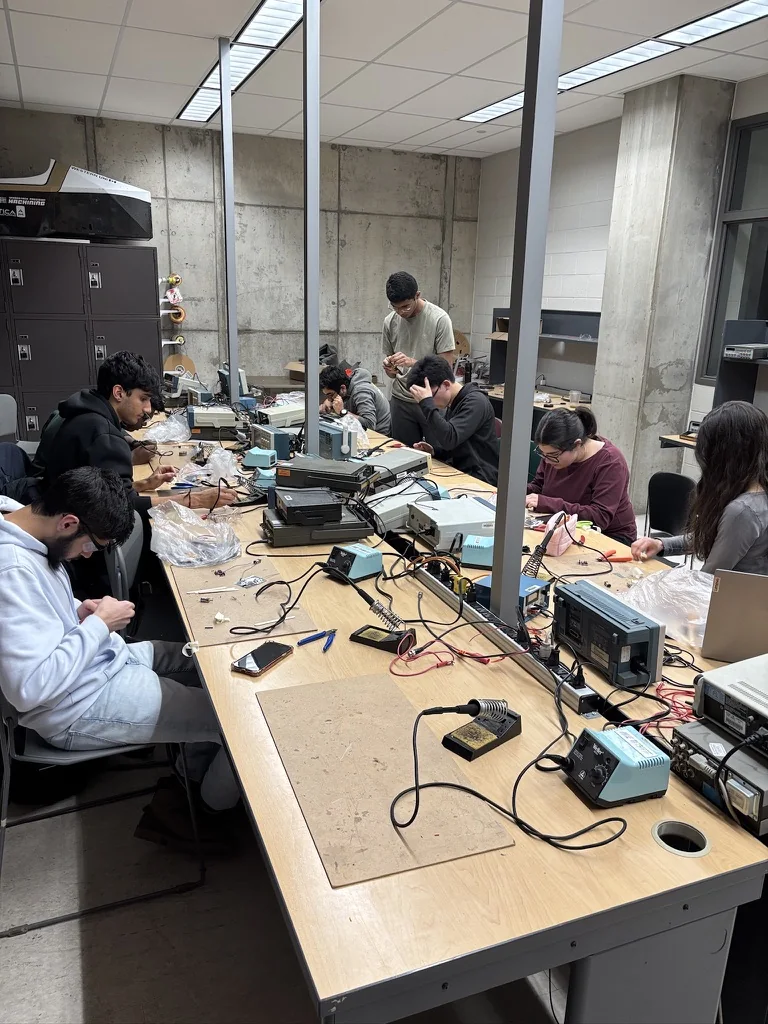 Ongoing
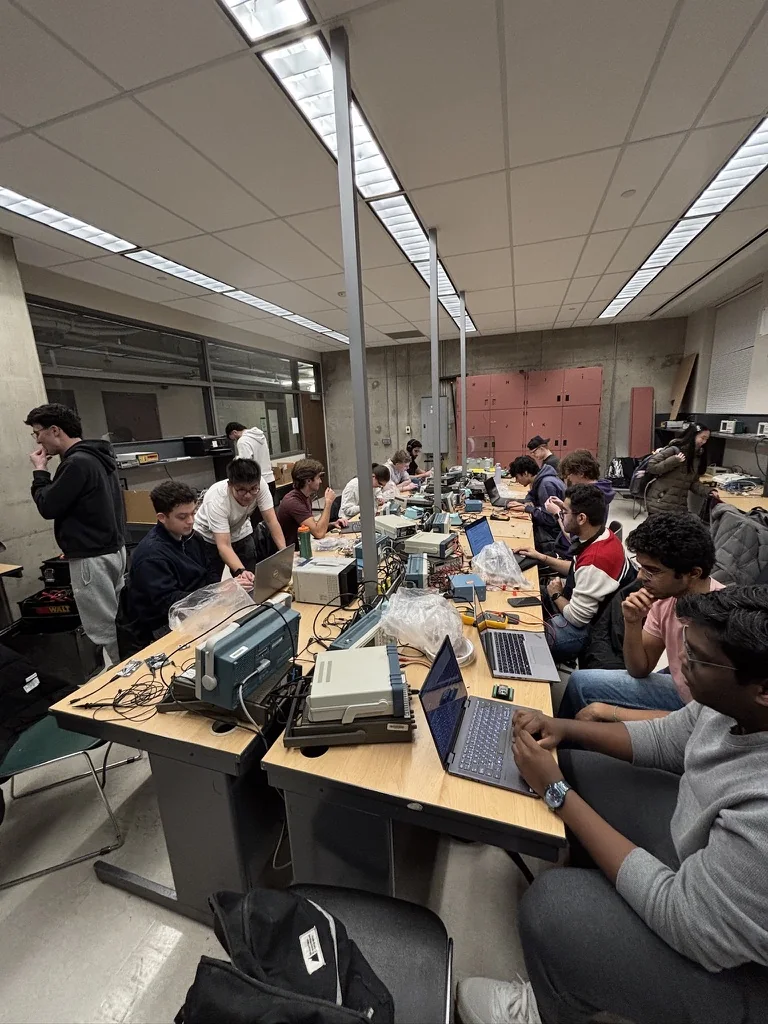
From an elementary after-school club to university workshops and FRC lead mentoring, teaching has grown alongside my technical work.