
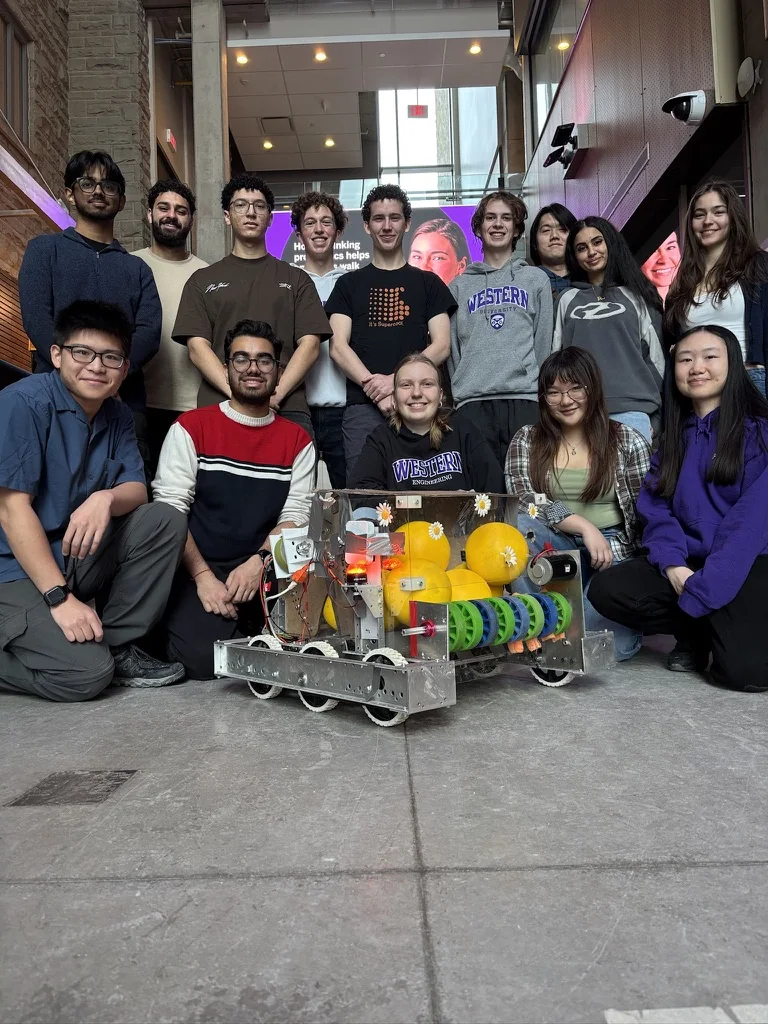
 Prototype completed
Robot in Three Days
Organizing a three-day robot build and leading the mechanical work, with hands-on development of the shooter and indexer.
From watching a cell to improving its workflow.

Mechanical upgrades, prototype iteration and installation coordination in an active automotive welding environment.
At FIO Automotive Canada, I worked on welding equipment and production issues. My projects began with observing a cell and understanding the problem, then moved through design, testing, fabrication and installation.
Hot MIG-welded parts needed to cool before entering the finished-goods bin. The existing workflow used separate cooling nests followed by a finished-part check.
I designed a chute that queued three parts for passive cooling and brought the lower part into a checker. Inductive and beam-break sensing checked selected features, with a blocker controlling access to the finished-goods bin. Bringing those steps together removed an extra transfer from the operator’s workflow.
Increasing pneumatic flow made a clamp faster, but it began dropping the part. An external hydraulic damper slowed the last part of the motion while retaining faster travel earlier in the arc. Revised holding fingers and larger magnets also helped part retention.
Other changes addressed ejection binding through revised pins and locators with reduced contact. I also assisted a contractor with robot-motion and PLC changes. The contractor carried out that programming and robot teaching; my contribution was assistance and project coordination, not independent authorship of all the controls work.
I spent time at the cell watching the machinery before proposing changes. I then modelled upgrades, installed prototype parts during available downtime, tested them and revised the designs before arranging machining and installation.
I was the main contractor contact for my projects and sought support from my supervisor when needed. The same process supported quality work: trace a defect, prevent it at its source or improve the finished-part check, then validate a practical change.
I also obtained support for additional 3D-printing capability and designed an aluminum-extrusion and polycarbonate enclosure to house and protect the printers. It was a smaller project with the same path from a practical need through design, fabrication and installation.
The projects improved handling, equipment behaviour and production workflow. They gave me experience taking a practical problem from observation through mechanical design, prototype testing and coordinated installation.
Prototype completedOrganizing a three-day robot build and leading the mechanical work, with hands-on development of the shooter and indexer.
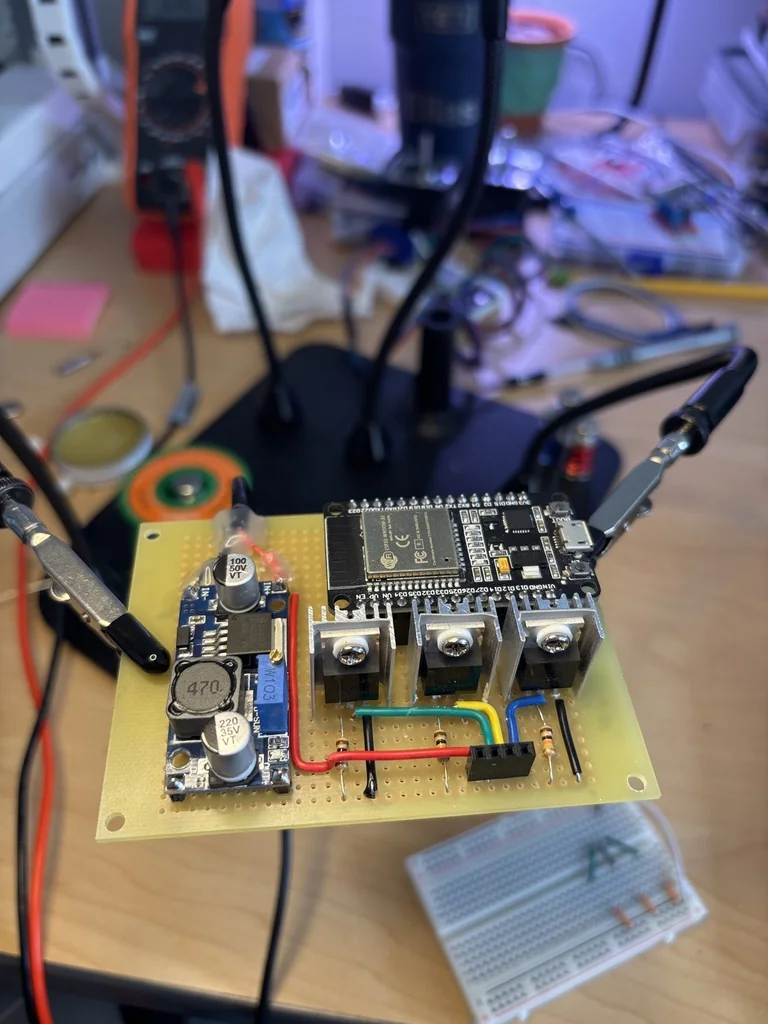 Installed and in use
An ESP32 lighting system that turns the morning forecast into colour, brightness and animation, without needing to open a phone.
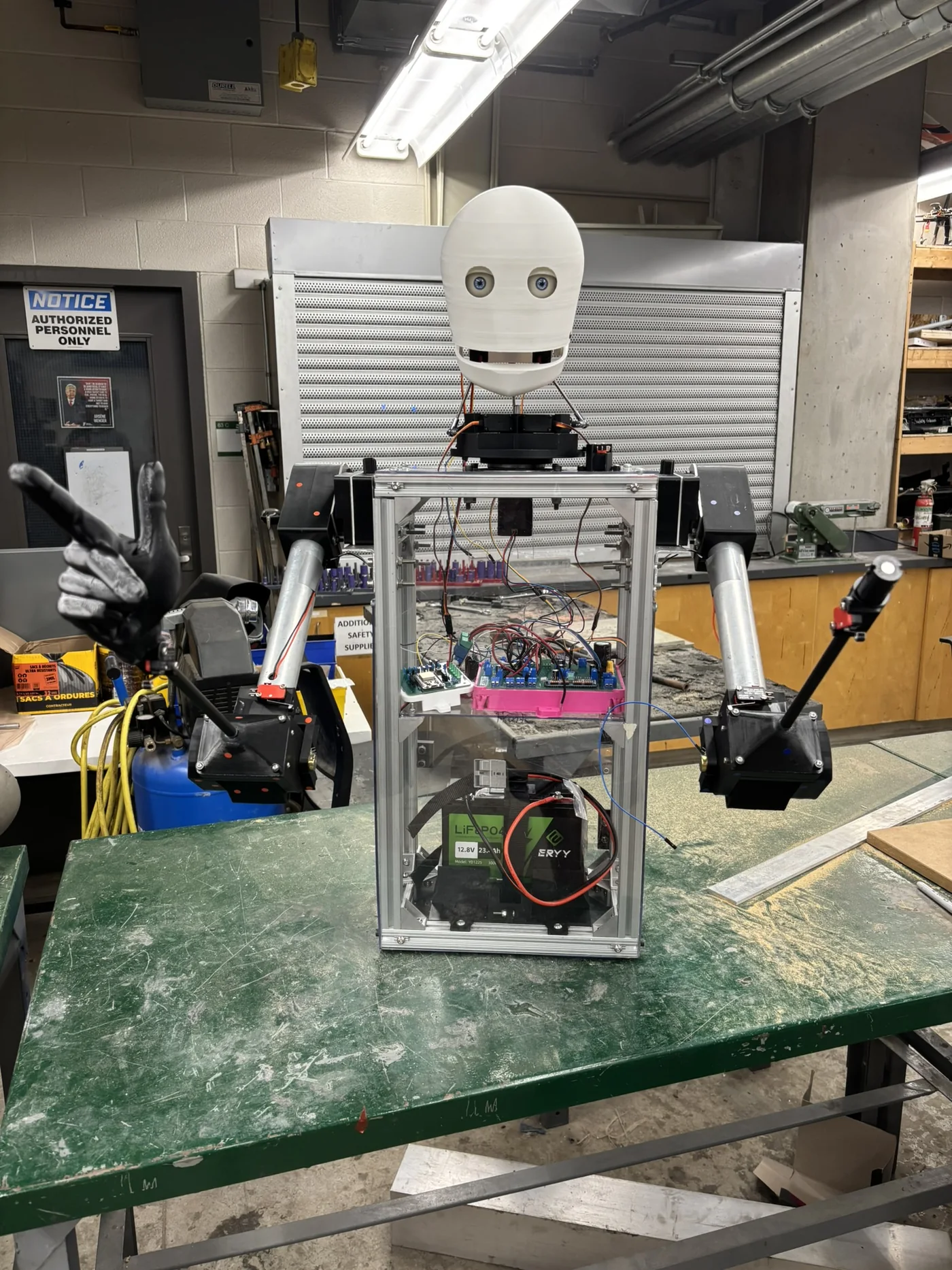 Software integration in progress
Leading a 12-person student build of an AI-enabled co-lecturer for Professor Baker, while independently developing the robot’s expressive head.