
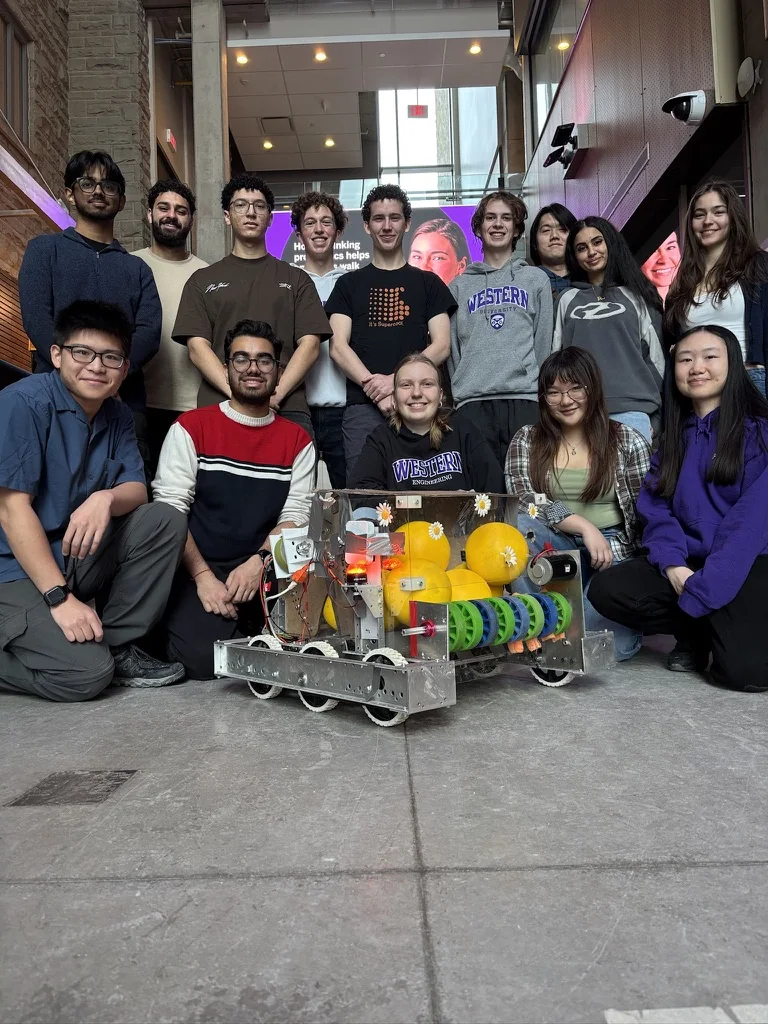
 Prototype completed
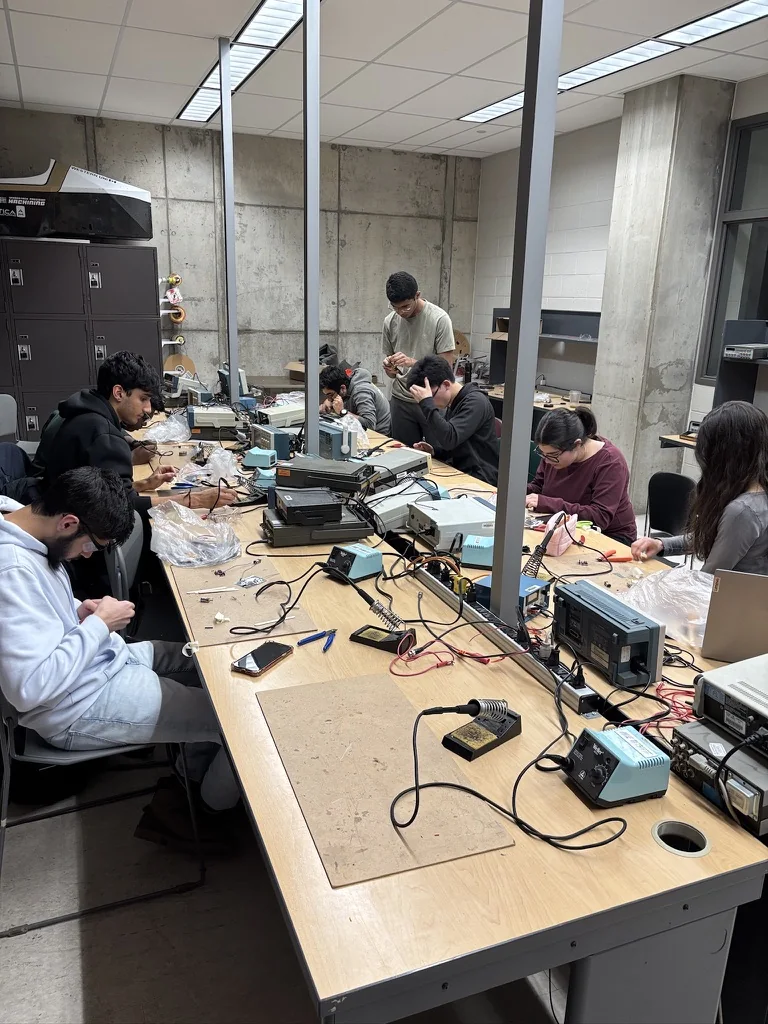
Robot in Three Days
Organizing a three-day robot build and leading the mechanical work, with hands-on development of the shooter and indexer.
A robot with something to say.
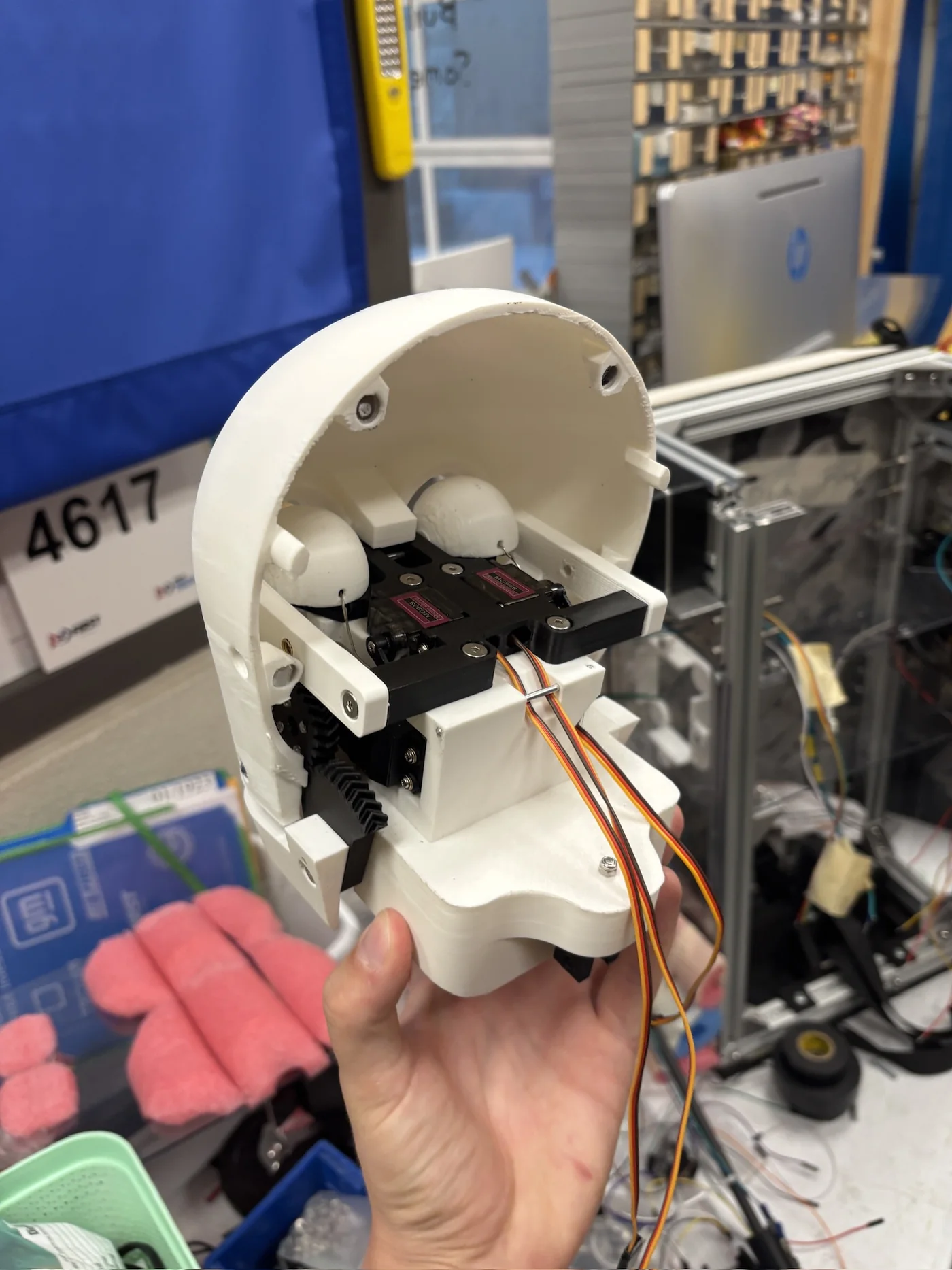
A close-up bench test of the head mechanism I developed: the eyelids blink and the jaw opens and closes, with the actuator linkages visible.
Plays automatically while in view. You can pause it anytime; reduced-motion preferences are respected.
Open videoThe video could not load here. Use the Open video link to view the clip directly.
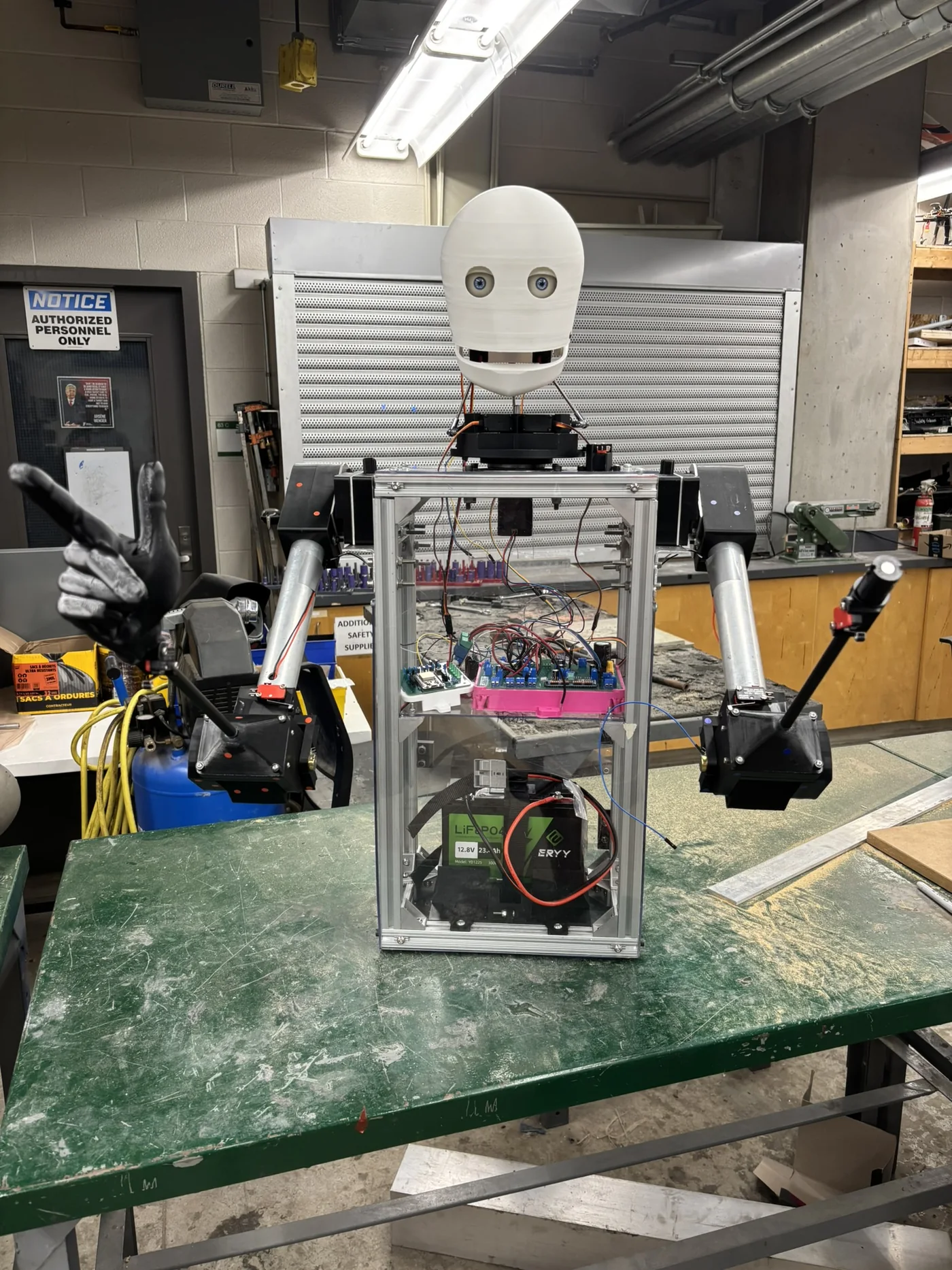
Leading a 12-person student build of an AI-enabled co-lecturer for Professor Baker, while independently developing the robot’s expressive head.
The goal is a teaching tool that Professor Baker can talk to and play off during lectures. An AI response will be accompanied by gestures and facial movement suited to its context and tone.
The head needed room for its actuators without changing its proportions. The jaw was especially difficult: its desired rotation point was inside the mouth cavity, where placing a servo would obstruct the mouth.
I offset the jaw motor with a herringbone-gear drive. That freed the cavity and allowed a gear ratio instead of direct drive. I used a third-party SolidWorks gear generator for the gear geometry and designed the mechanism around the available space. Small SG90 servos move the eyelids through paperclip linkages connected to their horns.
Our team lived across Ontario, so the subsystems had to meet at the end of the summer. Detailed CAD and advance electronics planning helped us work through interfaces before final assembly. Each team proved out its own subsystem before bringing the pieces together.
My role reaches across those interfaces: understanding how the mechanical assemblies, power electronics and controllers fit together, keeping the leads aligned, and working through integration problems with them.
The robot has motorized elbows, neck rotation and multidirectional tilt, a jaw and eyelids. Its hardware combines a Jetson, ESP32 control and custom PCBs. Mechanical and electrical work is complete, and the subsystems work separately.
The remaining work connects embedded motor control, gesture scheduling and emotional/context cues from the cloud AI. My personal programming contribution so far is limited to head-movement methods; the wider software pipeline is a team effort and is not yet a finished demonstration.
The built subsystems are working individually. Coordinated movement and AI-driven context-to-gesture control remain in progress, so the intended co-lecturer behaviour is still a development goal.
Detailed CAD with satin-metal and matte-polymer viewing materials. Slow rotation pauses when you interact; reduced-motion preferences are respected. Colours and finishes are for visualization.
 Prototype completed
Organizing a three-day robot build and leading the mechanical work, with hands-on development of the shooter and indexer.
 Installed and in use
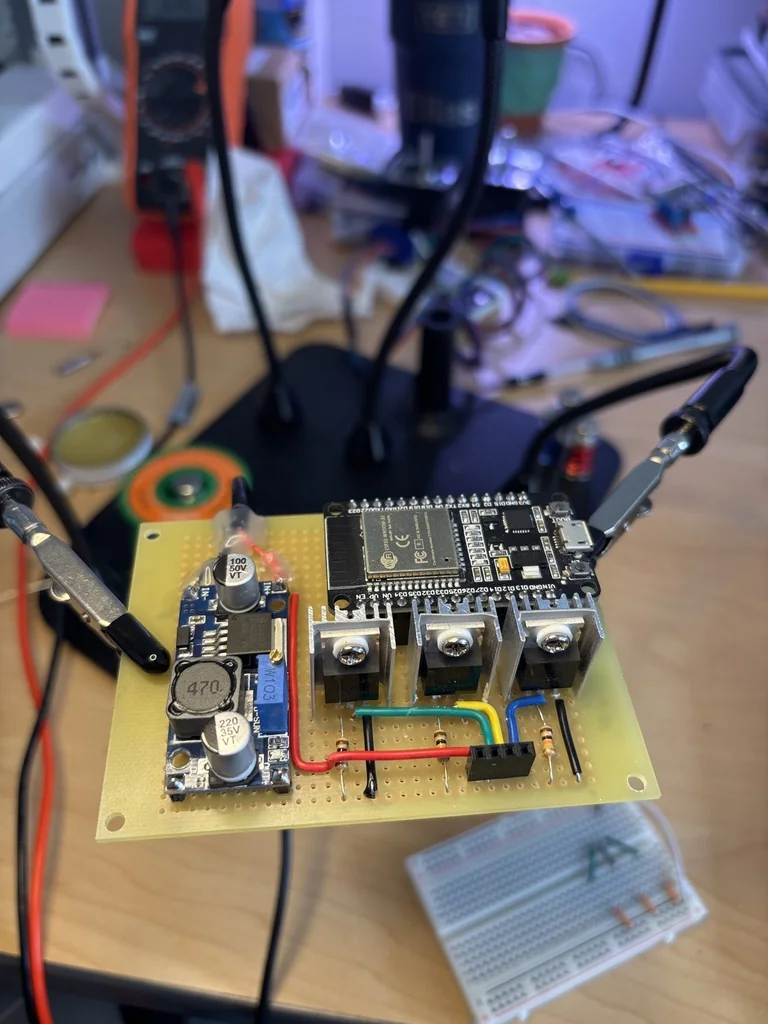
An ESP32 lighting system that turns the morning forecast into colour, brightness and animation, without needing to open a phone.
 Ongoing
From an elementary after-school club to university workshops and FRC lead mentoring, teaching has grown alongside my technical work.