
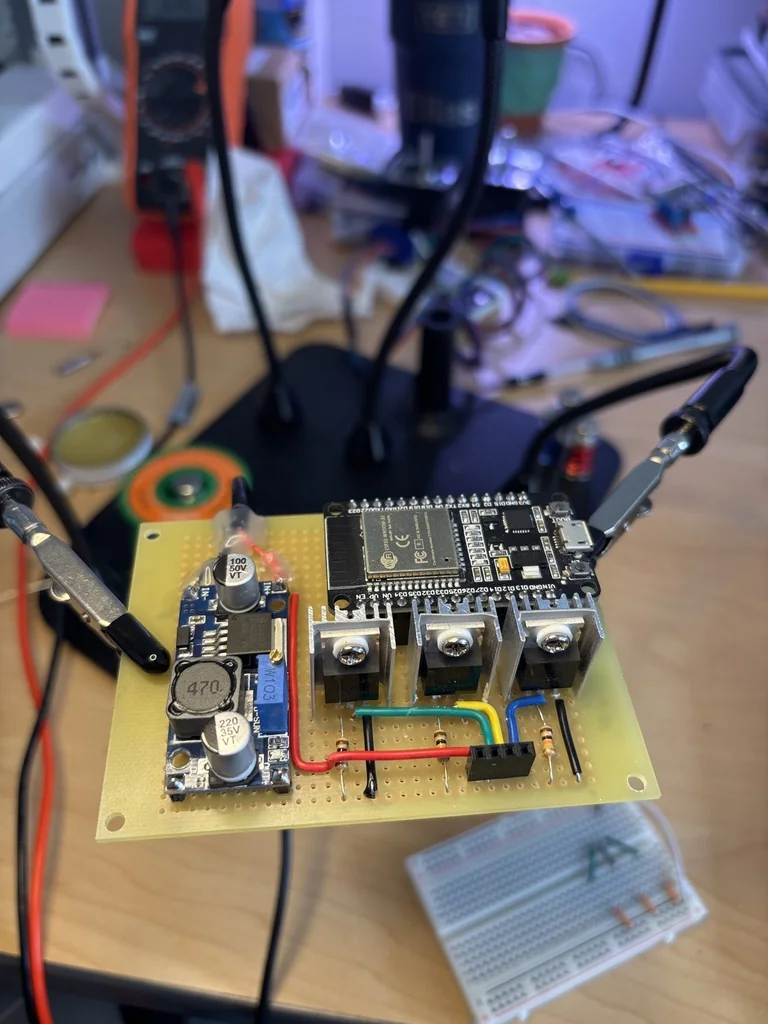
 Installed and in use
Weather lights
An ESP32 lighting system that turns the morning forecast into colour, brightness and animation, without needing to open a phone.
From data buses to inverse kinematics.
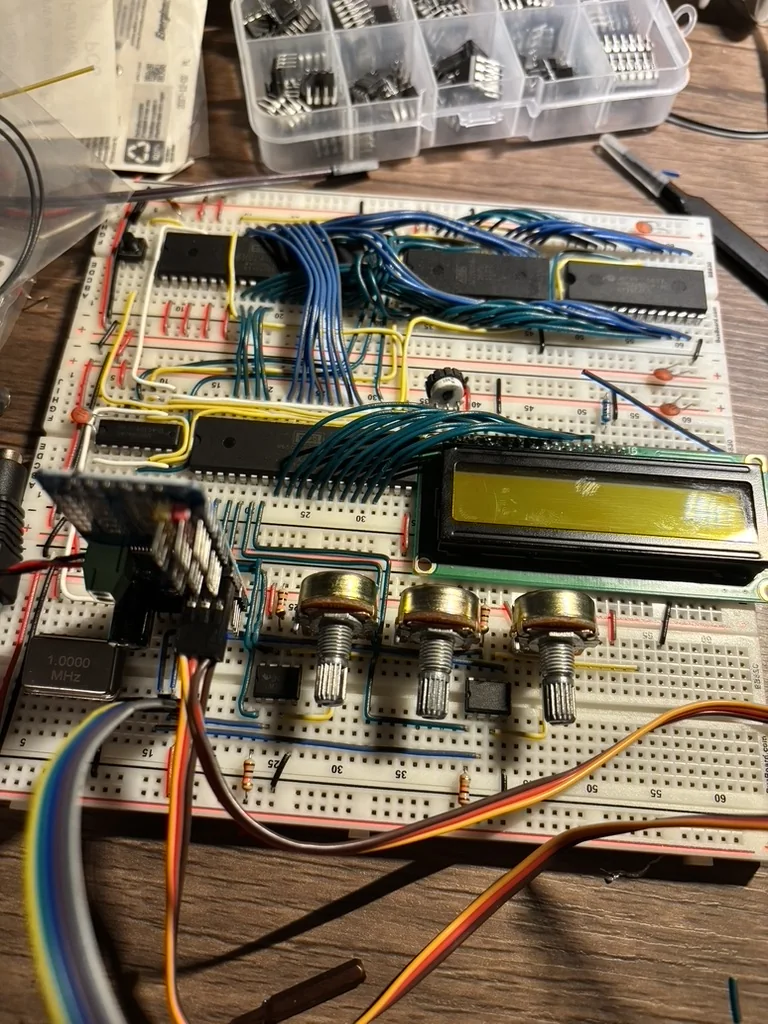
A Ben Eater-based computer extended with joystick and servo interfaces, plus independently derived arm kinematics calculated in assembly.
This was one of my early personal projects: build a computer, understand its buses and addressing, then use it to solve and control something physical.
The computer ran at 1 MHz. To drive the arm’s servos, I connected a 16-channel I2C-to-PWM device and bit-banged the I2C signalling through the VIA. A joystick interface used voltage thresholds and a dead zone to turn analogue movement into digital direction inputs.
Ben Eater’s design supplied the computer foundation. The peripheral interfaces and arm program were my additions.
I did not want to rely only on a lookup table of precomputed servo angles. I independently worked through a geometric inverse-kinematics solution using two intersecting circles to locate the elbow, then calculated the relative shoulder and elbow angles.
To evaluate that solution on the computer, I first built arithmetic routines and Taylor-series-based trigonometric calculations in assembly. It was an opportunity to understand how mathematical operations can be built from much smaller machine-level steps.
The arm moved, but the servos were not consistently stable. I could not fully determine whether the problem came from signalling, power or PWM configuration, and I did not have a logic analyzer to diagnose it properly.
That limitation is part of the outcome. The project taught me a great deal about low-level software and circuit debugging even though it did not become a precision arm.
I built and extended a working computer and implemented the arm mathematics on it. Servo jitter remained unresolved. The circuit-debugging experience later helped me investigate problems in other embedded builds.
Installed and in useAn ESP32 lighting system that turns the morning forecast into colour, brightness and animation, without needing to open a phone.
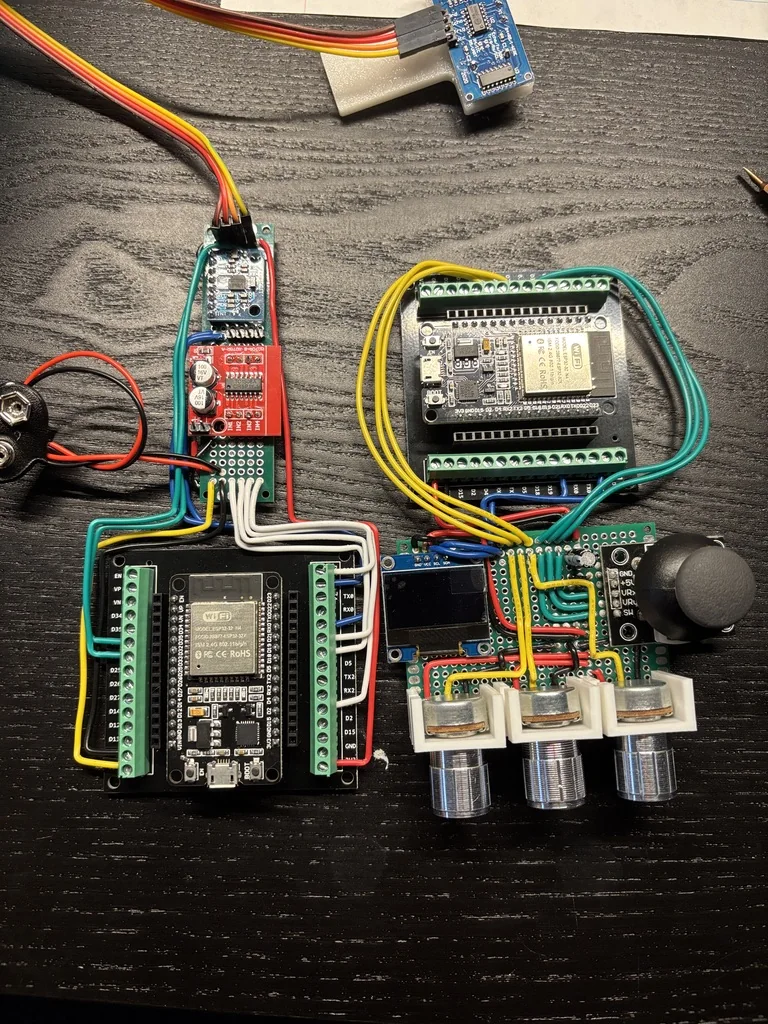 Teaching prototype built
A heading-controlled robot and live PID-tuning remote, developed as a reference for a 14-week WE FIRST workshop series.
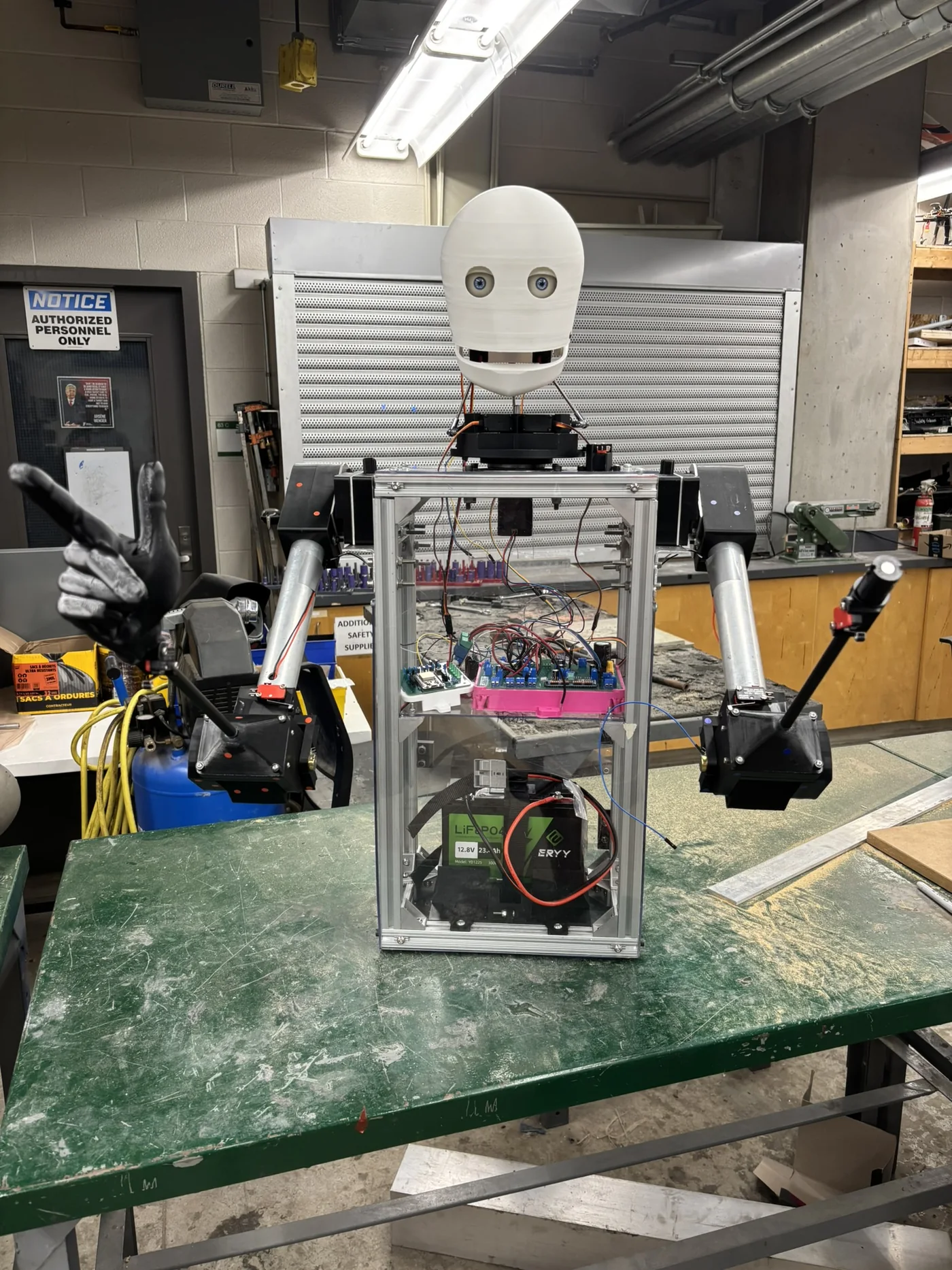 Software integration in progress
Leading a 12-person student build of an AI-enabled co-lecturer for Professor Baker, while independently developing the robot’s expressive head.